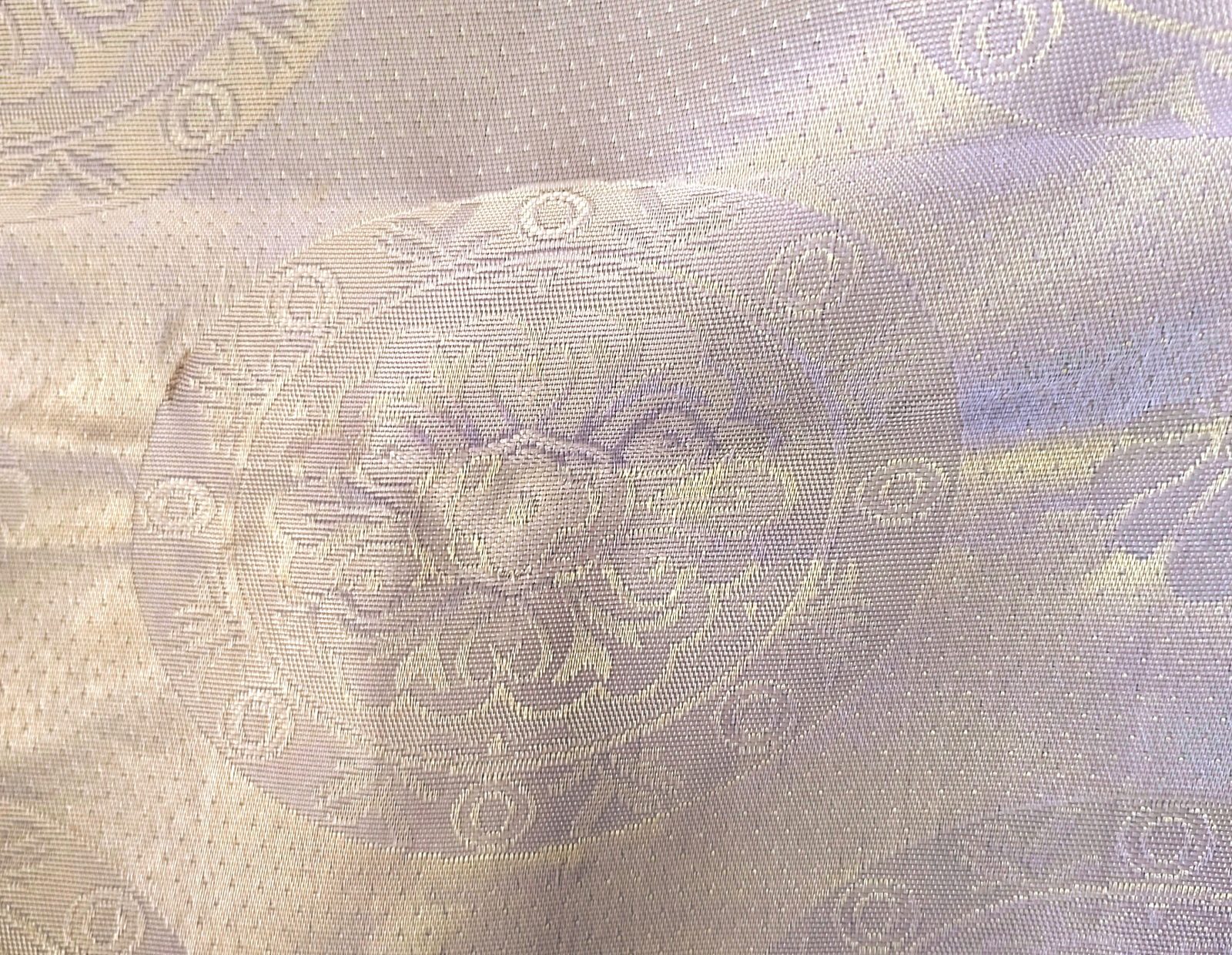
Warp one colour, weft another. Tilt it and the colour moves. Nothing is printed: the shift is two coloured yarns taking turns on the face.
Shot silk is a plain idea plainly executed: one colour in the warp, another in the weft, and a satin structure that pushes long warp floats onto the face. Move your eye and the ratio of warp to weft you can see changes, so the colour changes with it. The grey-violet and bone combination here came off a sample card from the early 1980s and we have never improved on it.
It is fussy about light. Under a shop fitting you can barely see the shift; take it to a window and turn it twice and it is obvious. So every card we send goes out with a note: look at this in daylight.
Large evening panels, linings, anything meant to hang and move. Not recommended next to the skin — satin floats are long, and a fingernail will pull a thread.
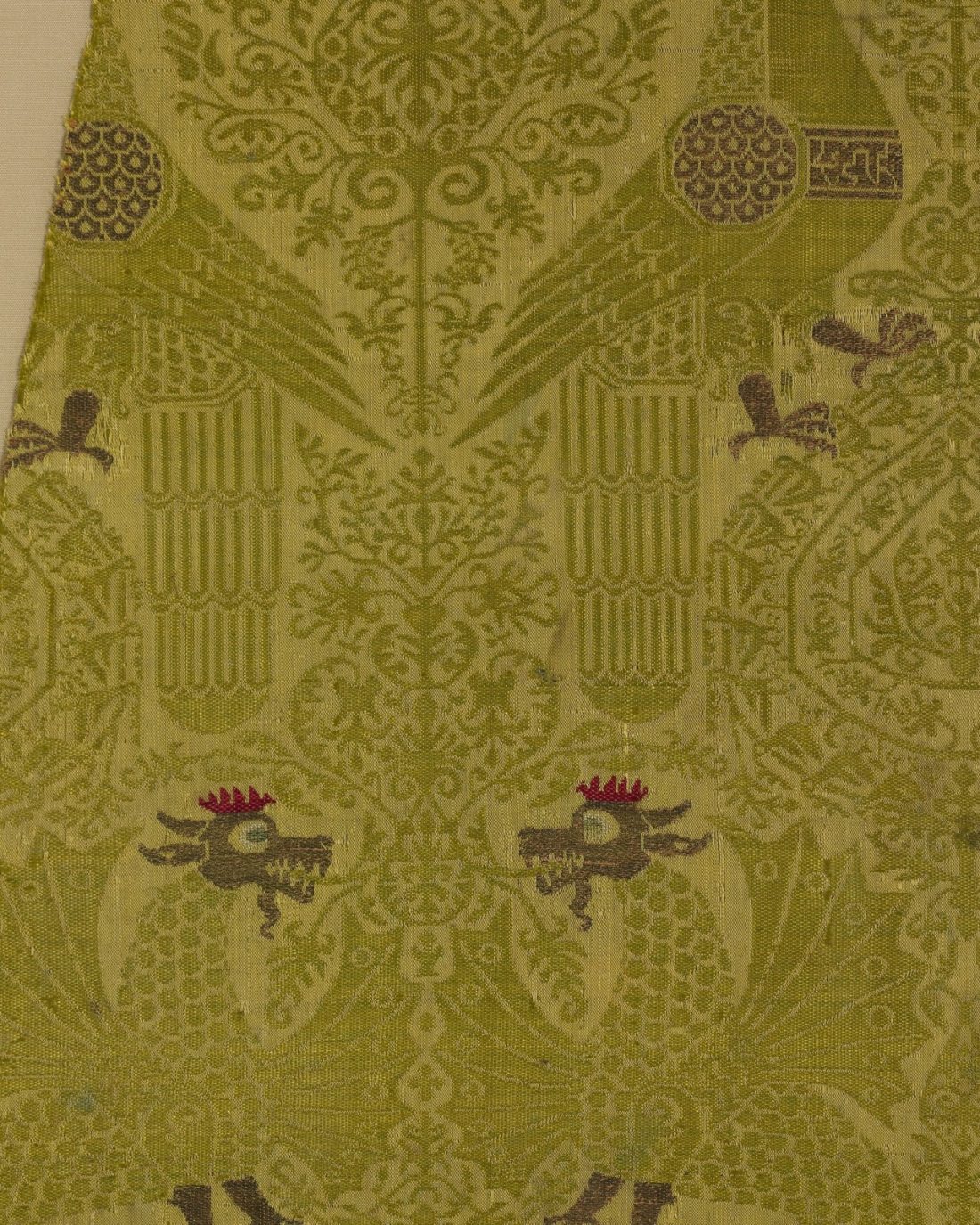
Gilt thread on an olive ground, drawn from a seventeenth-century fragment. A 48 cm repeat, and 2,400 cards to weave one of them.
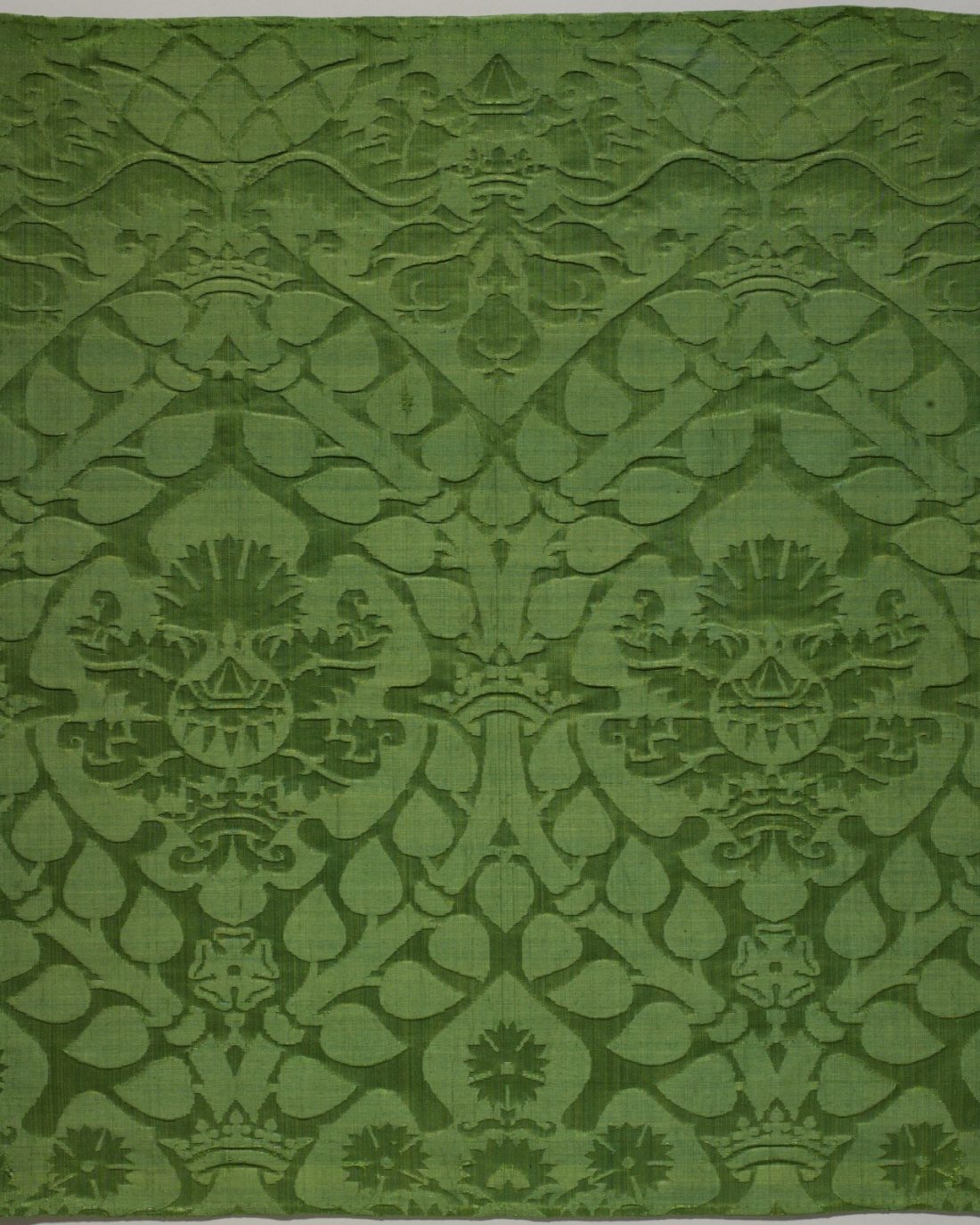
Figure and ground are the same thread. The pattern exists only as a difference in how two structures reflect. Flat light hides it; raking light brings it up.

An 8 momme gauze given a water-repellent finish. A drop sits on the air trapped between the threads instead of spreading into them.
Bring a swatch, a drawing, or just a sentence — "it should drape without going soft" is enough to start. We work backwards from yarn count. Minimum run 30 metres.