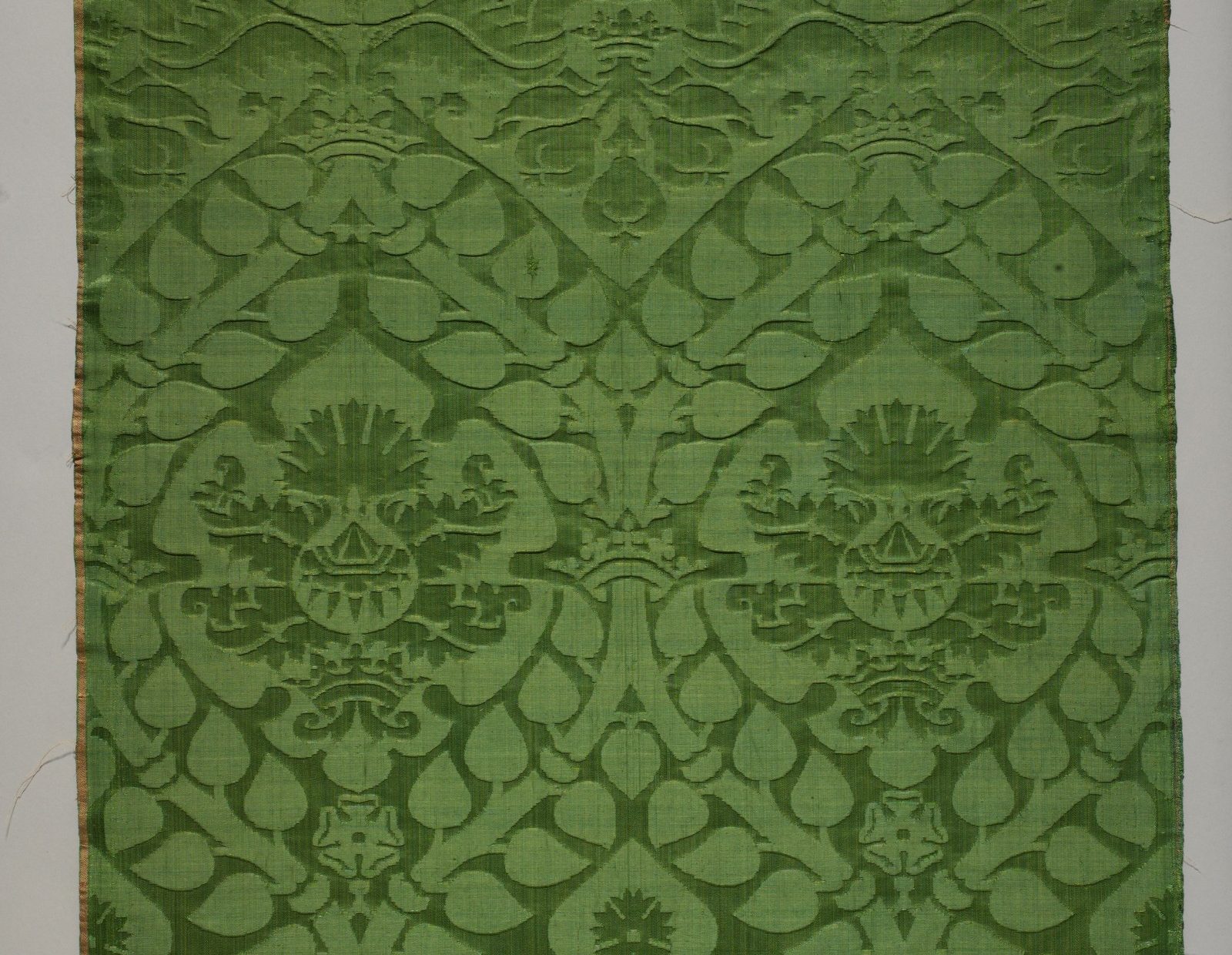
Figure and ground are the same thread. The pattern exists only as a difference in how two structures reflect. Flat light hides it; raking light brings it up.
Self-figured damask is the hardest thing to design well, because colour is no help. The whole pattern is carried by the difference between a warp-faced satin and a weft-faced satin reflecting light in two directions. Get the angle wrong and there is nothing to see, so you have to design it already thinking about how the finished garment will sit.
A 24 centimetre repeat, medallions and scrolling stems. Ground in five-end warp satin, figure flipped to five-end weft satin — which is to say the face and the back of the same cloth, laid next to each other on one plane.
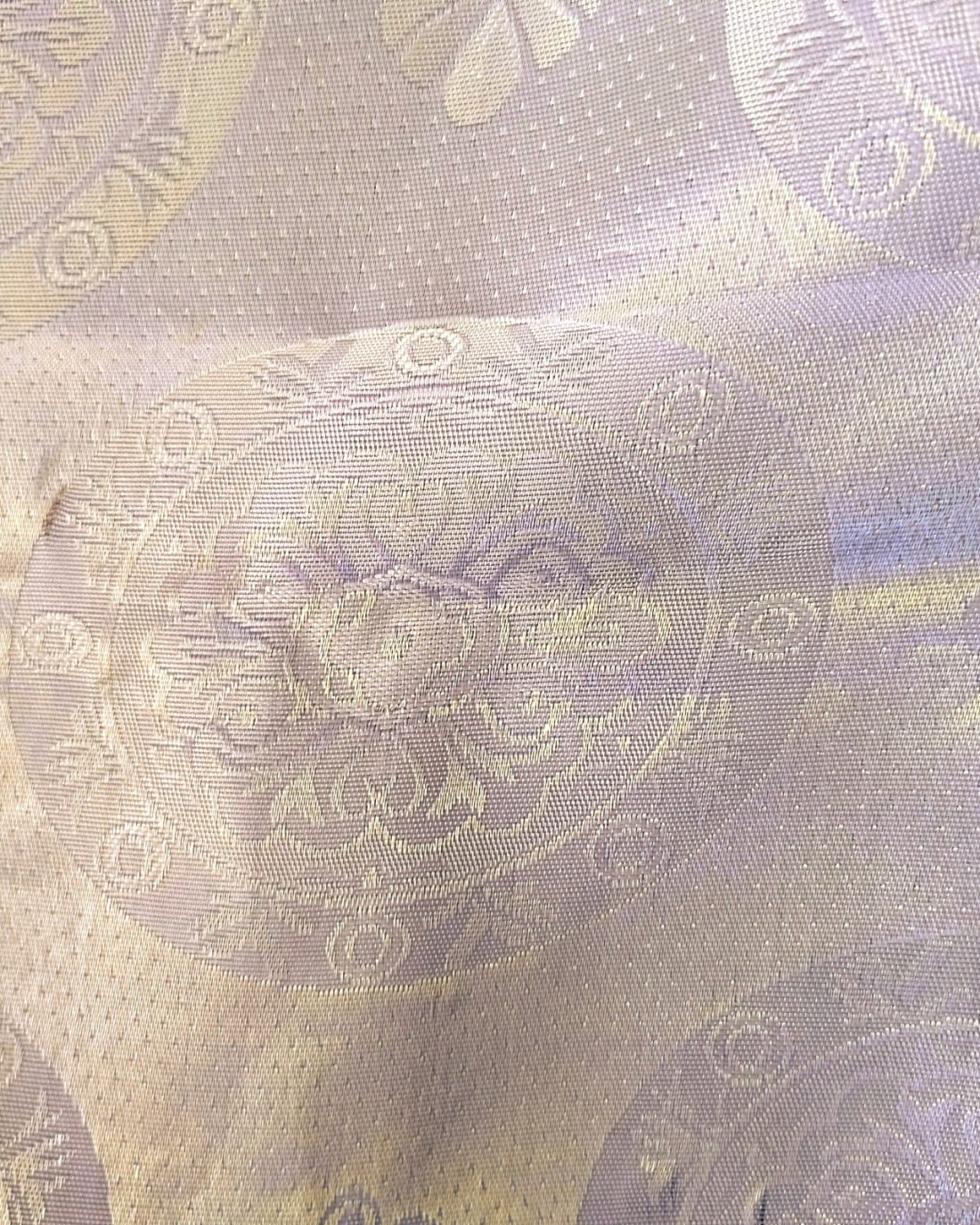
Warp one colour, weft another. Tilt it and the colour moves. Nothing is printed: the shift is two coloured yarns taking turns on the face.
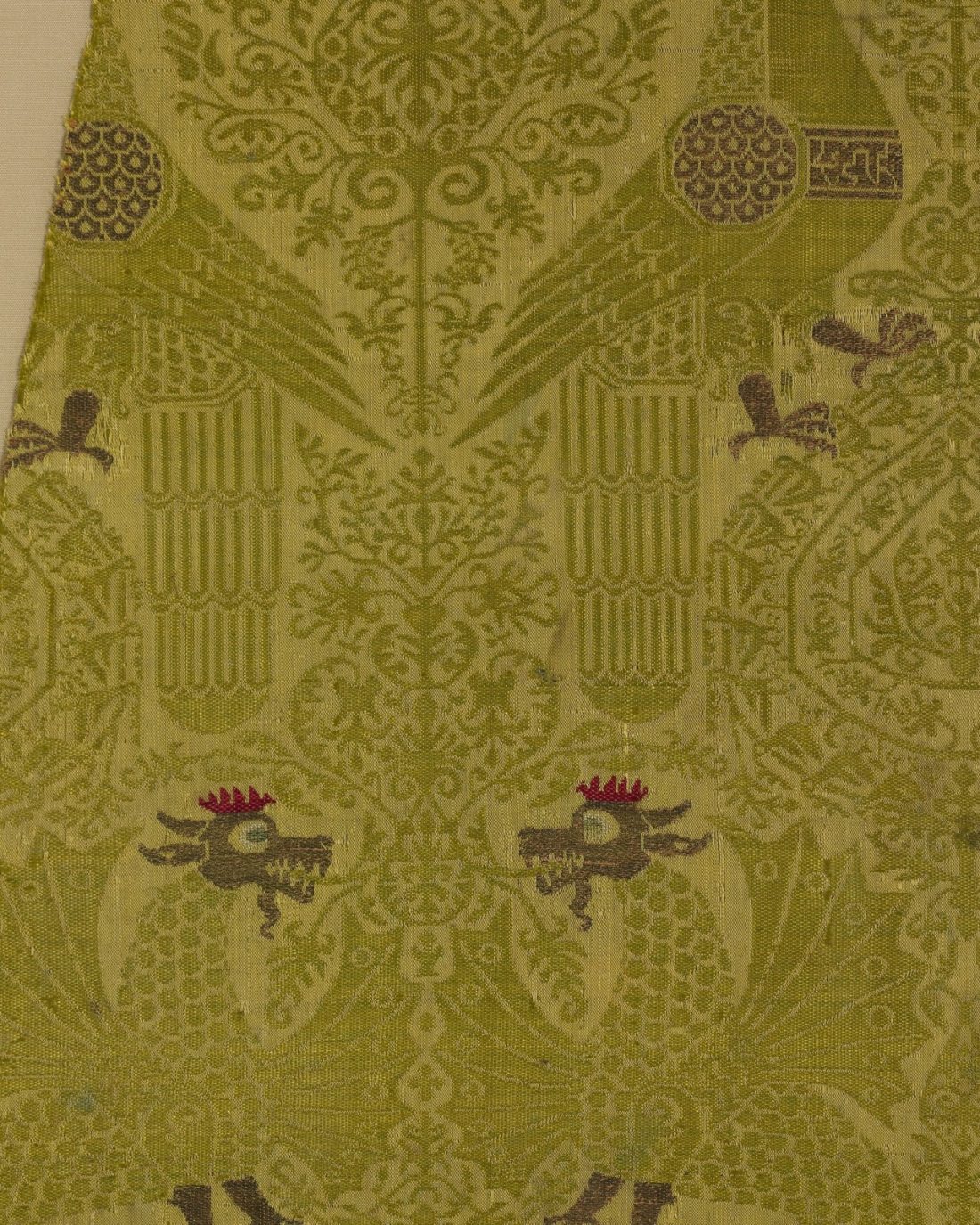
Gilt thread on an olive ground, drawn from a seventeenth-century fragment. A 48 cm repeat, and 2,400 cards to weave one of them.
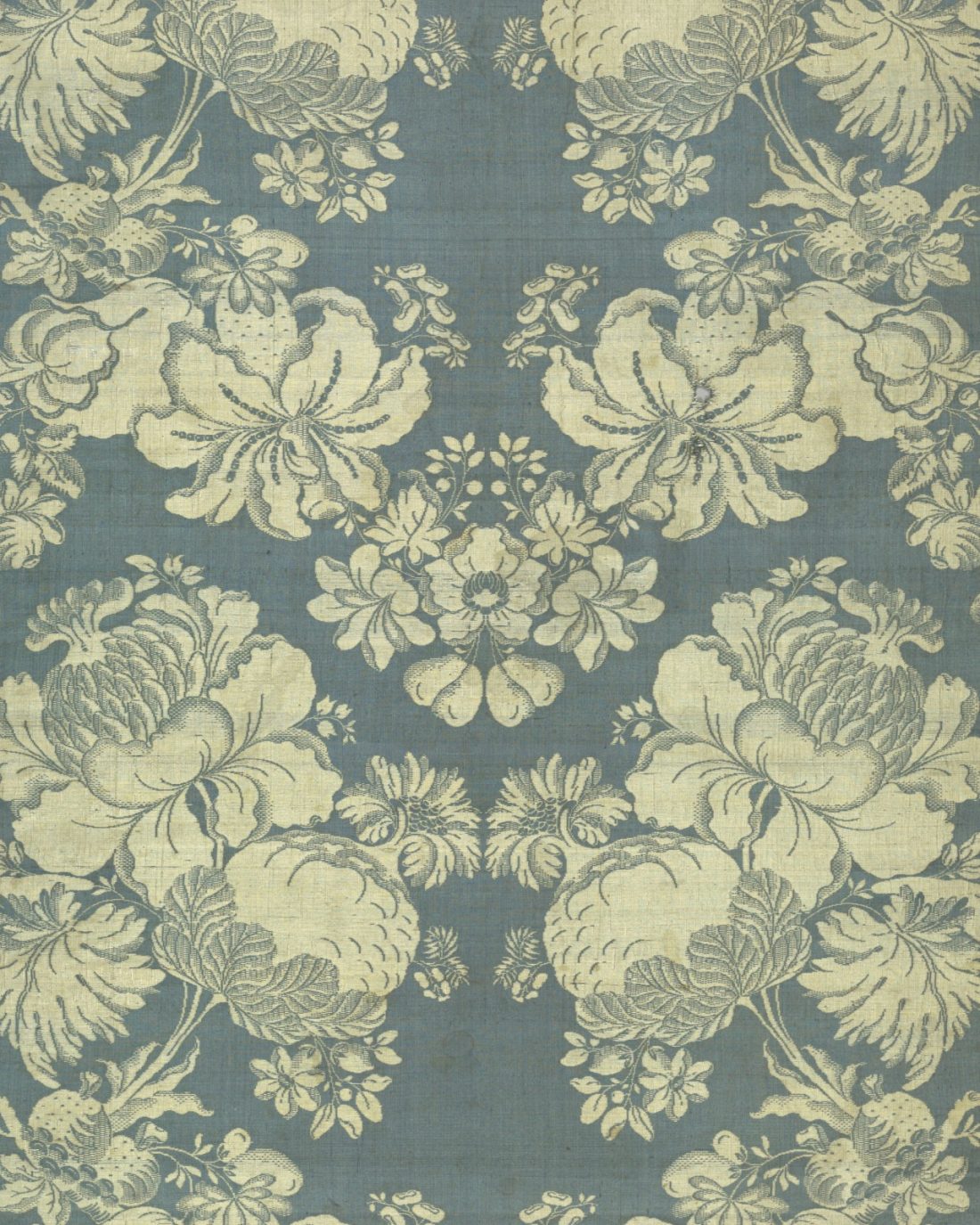
Bone figure on a grey-green ground. Thirty years on the same pattern, redrawn four times; the repeat has come in from 32 cm to 26.
Bring a swatch, a drawing, or just a sentence — "it should drape without going soft" is enough to start. We work backwards from yarn count. Minimum run 30 metres.