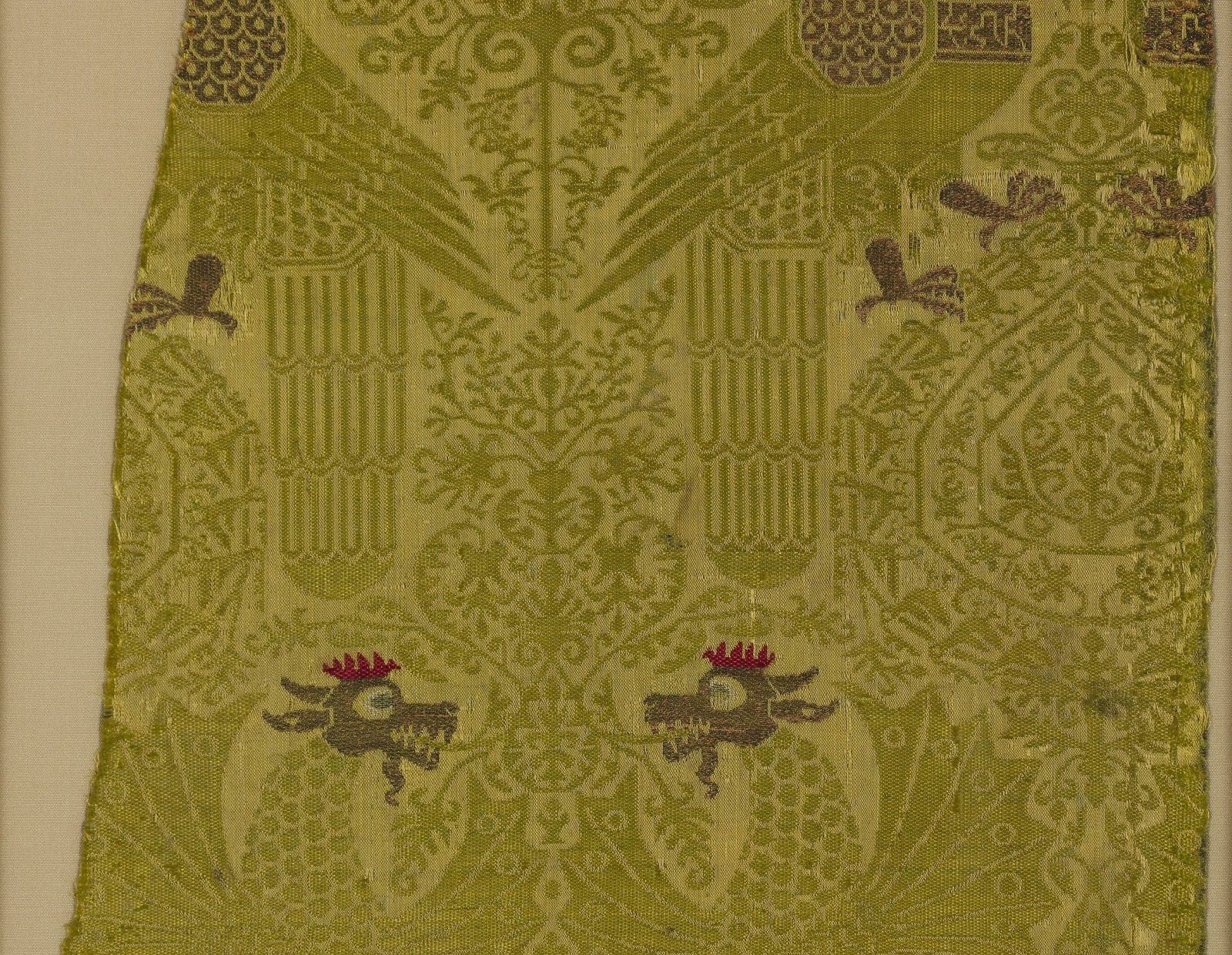
Gilt thread on an olive ground, drawn from a seventeenth-century fragment. A 48 cm repeat, and 2,400 cards to weave one of them.
Brocading means each small area of colour carries its own little shuttle, thrown only where that colour is wanted. No machine does it. It is done by hand, and this cloth comes off the loom at forty to sixty centimetres a day.
The figure was drawn from a seventeenth-century fragment. The repeat is 48 centimetres. Working the draft up took two months, and the card chain that drives it runs to 2,400 cards — a little over three metres of them hanging beside the loom.
Boil the sericin off and the figure collapses. This one keeps its gum deliberately, so the hand is firmer than you might expect. It was never meant to drape.
Figure drawn from a brocaded silk fragment in a museum collection (CC0).
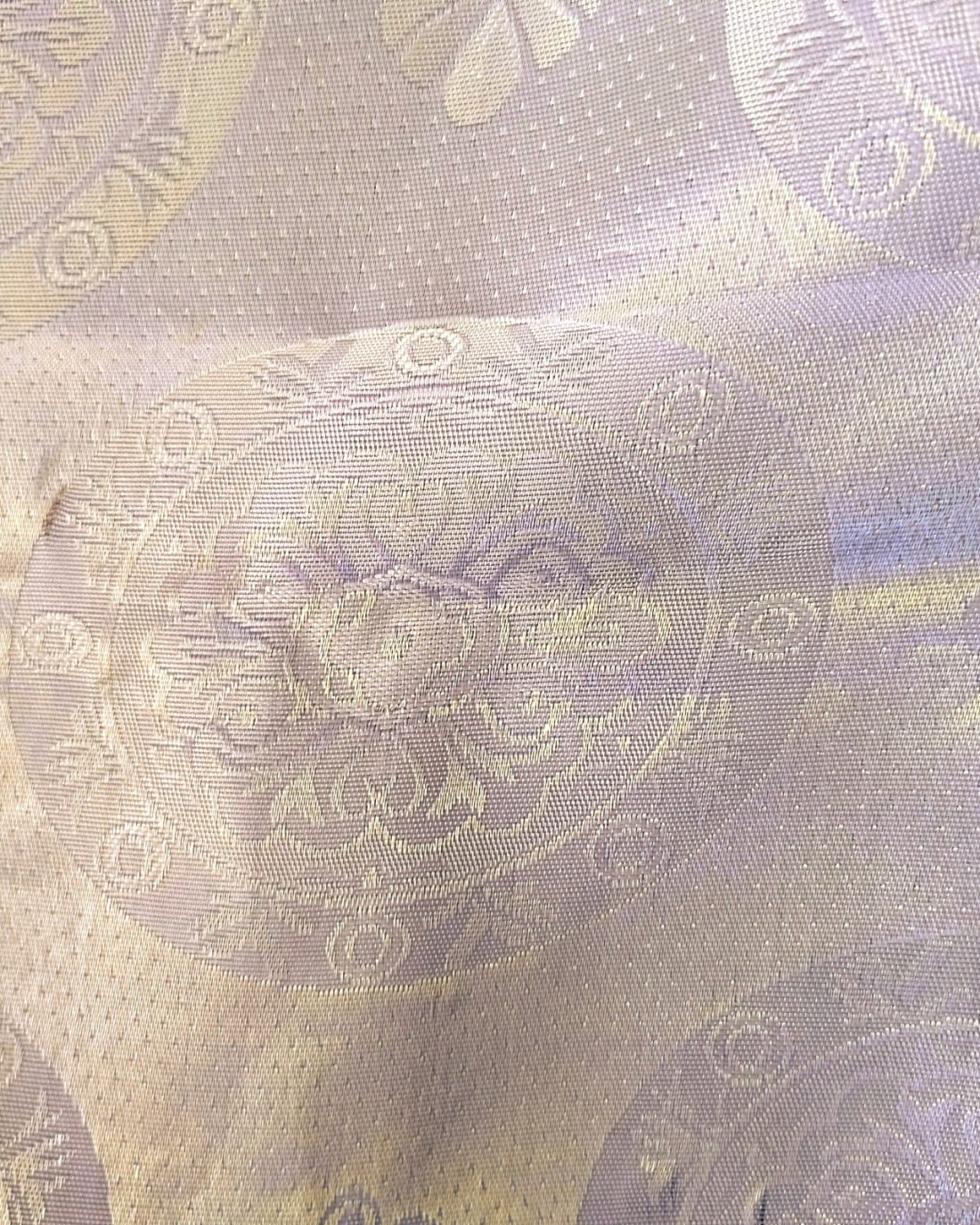
Warp one colour, weft another. Tilt it and the colour moves. Nothing is printed: the shift is two coloured yarns taking turns on the face.
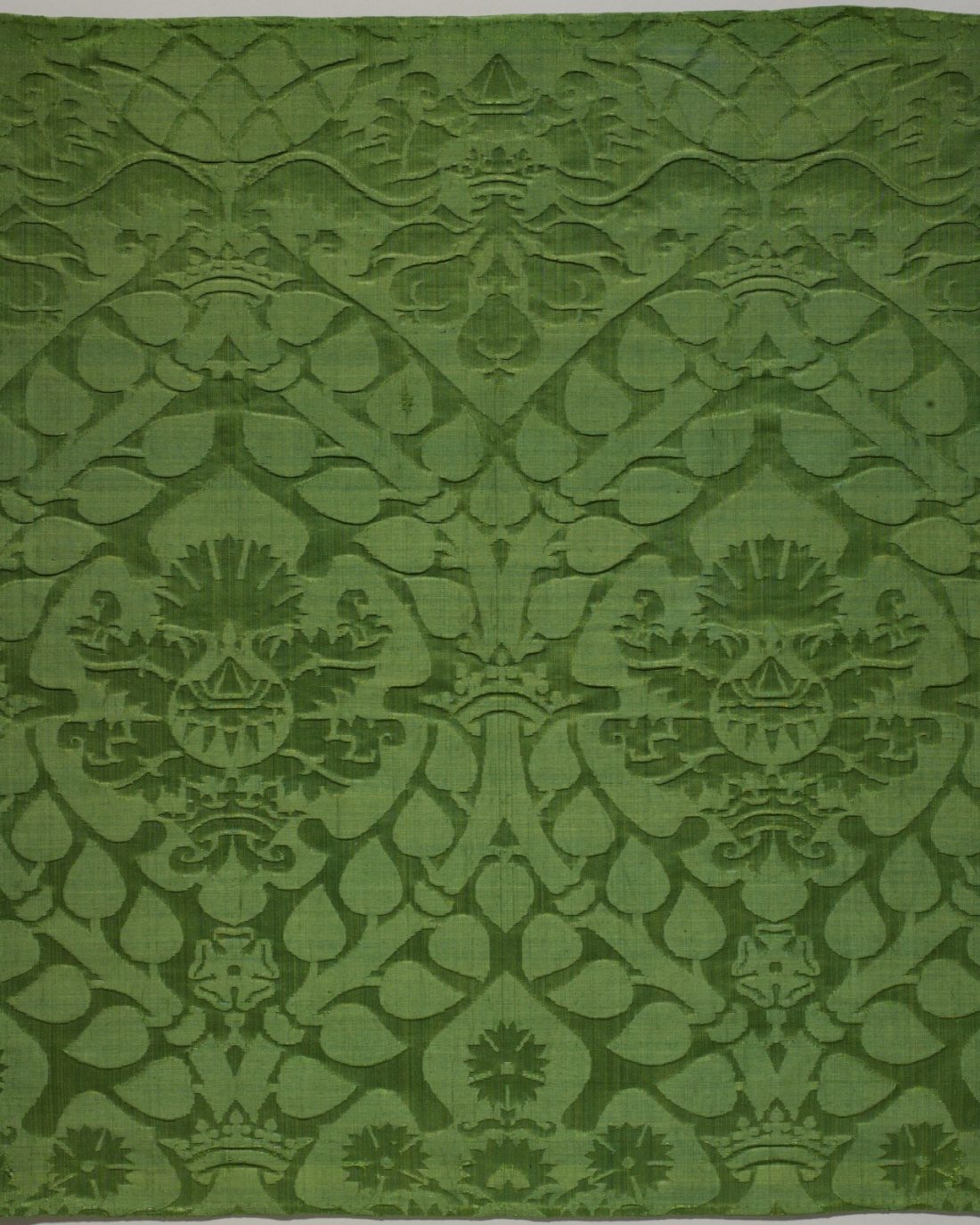
Figure and ground are the same thread. The pattern exists only as a difference in how two structures reflect. Flat light hides it; raking light brings it up.
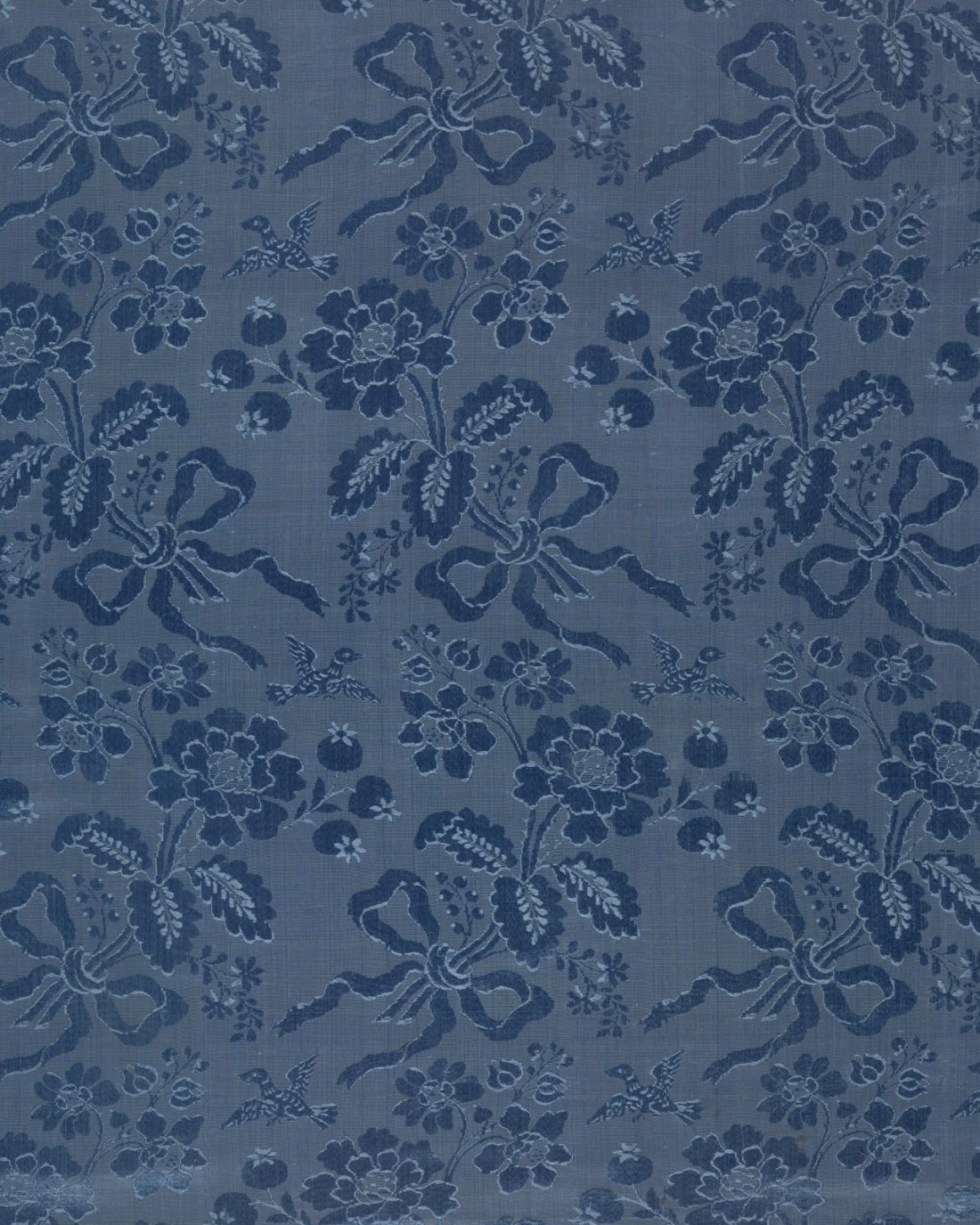
Six dips in natural indigo, aired between each one. Quieter than a synthetic navy, and it holds up far better in light.
Bring a swatch, a drawing, or just a sentence — "it should drape without going soft" is enough to start. We work backwards from yarn count. Minimum run 30 metres.